Bees are more than just adorable little buzzers flitting from bloom to bloom, they’re essential to our planet’s health and the food we eat every day. These tireless pollinators play a starring role in sustaining ecosystems and ensuring bountiful harvests.
But here’s the buzzkill: bee populations around the globe are under threat due to habitat destruction, pesticide use, climate change, and disease. The exciting part? You don’t have to be a scientist to help.
Anyone, yes, even you, can step up and make a meaningful impact right in your own neighborhood. Ready to create a buzz and be a hero for the bees? Let’s dive into the fun, impactful ways you can help these amazing pollinators thrive!
Why Bees Matter: The Tiny Titans of Nature
Before we get to the “how,” let’s talk about the “why.” Bees are responsible for pollinating nearly 75% of all flowering plants and about 35% of the crops that feed the world. From juicy strawberries to crunchy almonds and colorful bell peppers, so many of our favorite foods wouldn’t exist without the hard work of bees.
But it doesn’t stop there. Bees also support biodiversity by helping wild plants flourish, which in turn provides food and shelter for countless other creatures. Their presence keeps our ecosystems buzzing with life. So when we protect bees, we’re also protecting nature, and ourselves.
Plant Native, Bee-Friendly Flowers in Vibrant Clusters
One of the simplest (and most beautiful) things you can do to support bees is to plant flowers bursting with nectar and pollen. Native plants are the real MVPs here because they’ve evolved with local bee species and provide exactly what these pollinators need.
Now here’s a pro tip: bees love clusters! Instead of scattering plants here and there, plant flowers in big, bold patches. Groupings of at least a dozen of the same type help bees save energy while they forage.
Even better, plant a variety that blooms in different seasons, spring, summer, and fall, so there’s always a buffet open for hungry bees. Some all-star native flowers include:
- Coneflowers (Echinacea)
- Black-eyed Susans (Rudbeckia)
- Bee balm (Monarda)
- Goldenrod (Solidago)
- Wild bergamot (Monarda fistulosa)
- Milkweed (Asclepias)
Say “Buzz Off” to Pesticides and Herbicides
Chemical pesticides, especially neonicotinoids, are a big danger to bees. They can mess with bees’ ability to navigate, reproduce, and stay healthy. Even weed killers can hurt bees by eliminating flowers they rely on for food.
To create a safe haven:
- Skip chemical sprays and go natural with pest control.
- Introduce helpful bugs like ladybugs, or use neem oil and insecticidal soap.
- Spread the word! Get your neighbors, schools, and local parks on board with bee-friendly practices.
Build Bee Hotels and Cozy Nesting Spots
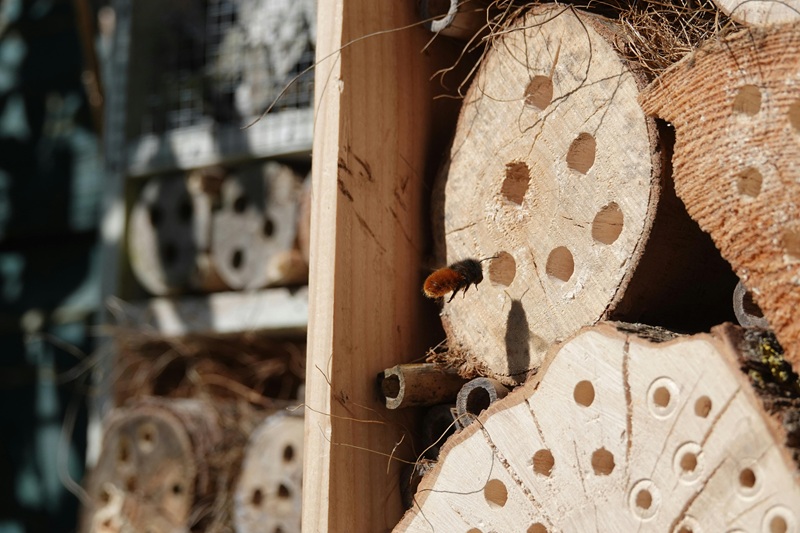
Not all bees live in hives! In fact, many native bees are solitary and prefer to nest in small holes or tunnels. Help these unsung heroes by building or installing bee hotels.
Here’s how:
- Use untreated wood blocks, bamboo tubes, or hollow stems.
- Drill holes between 2–10 mm in diameter to suit different bee species.
- Mount your hotel in a sunny, protected spot (facing south or southeast), about 3 feet off the ground.
- Keep the holes open at the back so bees can come and go freely.
DIY or buy, bee hotels are a fun project and a great way to turn your garden or balcony into a pollinator paradise.
Leave Some Bare Ground for Ground-Nesting Bees
Surprise! Around 70% of native bees live underground. These bees dig tiny tunnels in bare, well-drained soil to raise their young.
To roll out the welcome mat:
- Leave small patches of bare earth in your yard or garden.
- Don’t over-mulch or cover every inch with plants.
- Keep the soil loose and avoid heavy compaction.
It’s a low-effort, high-impact way to give bees a place to call home.
Add Water and Shelter to Your Bee Haven
Like all living creatures, bees get thirsty, especially on hot days. Set up a bee watering station to keep them hydrated:
- Use a shallow dish or birdbath with clean water.
- Add pebbles or marbles so bees can land safely.
- Change the water often to keep it fresh (and mosquito-free).
And don’t be too tidy! A few brush piles, dead wood, or leaf litter in a quiet corner of your yard can offer bees shelter and nesting materials. Nature’s a bit messy, and that’s okay!
Care for Your Bee Habitats Like a Pro
Creating a bee-friendly space is a wonderful first step, but keeping it healthy is just as important:
- Clean out bee hotels once a year and replace worn-out tubes.
- Avoid disturbing soil where ground-nesting bees may be active.
- Watch out for invasive species and remove them to protect native plants.
- Keep your garden pesticide-free and blooming all year long.
Your pollinator paradise deserves a little TLC to keep buzzing season after season.
Bring the Buzz to Your Community
Supporting bees is even more powerful when you do it together. Rally your neighbors and spread the buzz! Consider:
- Starting a pollinator garden at a school, park, or church.
- Hosting a community planting day or bee workshop.
- Collaborating with local environmental groups for outreach.
- Advocating for bee-friendly policies, like pesticide bans or green space preservation.
Not only will you help bees, you’ll build a stronger, greener community in the process.
Bee-utiful Success Stories to Inspire You
From coast to coast, communities are stepping up for the bees. In Portland, Oregon, pollinator corridors full of native flowers now brighten up roadsides and parks. Over in New York City, rooftop gardens offer a sky-high sanctuary for urban pollinators. These real-world wins prove that big change can start with small, local action.
You Can Make a Difference
Helping bees isn’t just good for the planet, it’s deeply rewarding. By planting native blooms, skipping the chemicals, offering nesting sites, and inspiring your neighbors, you’re doing something extraordinary.
Every flower you plant, every pesticide you avoid, and every bee hotel you build adds up to a better world, not just for bees, but for all of us. So grab your gardening gloves, gather your crew, and let’s make some noise for the bees. Together, we can create a buzz that echoes for generations!
This post is generated by ChatGPT