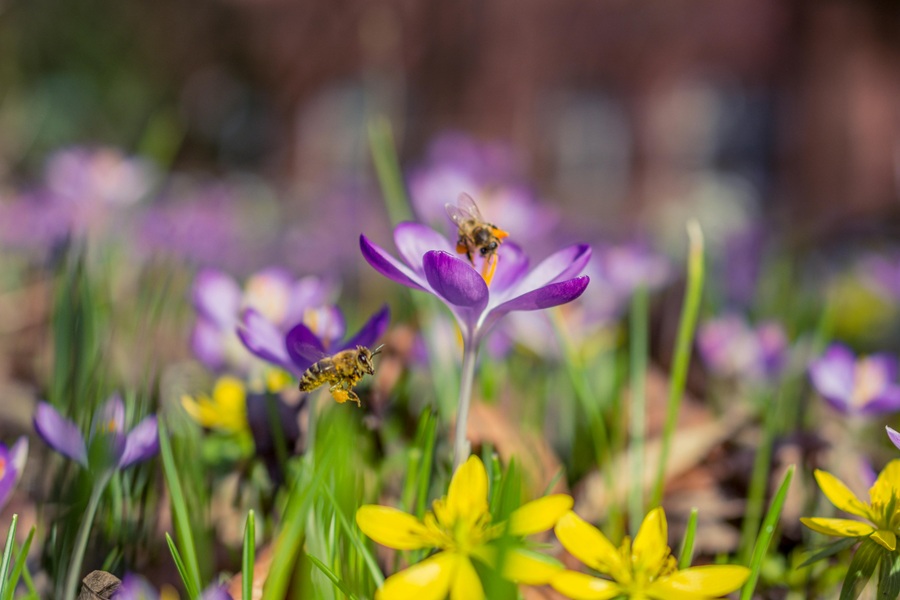
When you imagine a lively, thriving garden, what’s the first image that comes to mind? For many, it’s the cheerful sight of bees flitting from bloom to bloom, gathering nectar and pollen. These industrious pollinators are more than just garden visitors; they’re vital to the pollination process, which ensures the growth of many fruits, vegetables, and flowers.
In fact, about one-third of the food we eat relies on their efforts. Unfortunately, bee populations are declining due to habitat loss, pesticides, and other threats. Now, more than ever, we need to create supportive environments for these essential creatures.
Let’s explore some of the best buzz-worthy blooms that will attract bees to your garden and help them thrive.
Zinnias (Zinnia elegans)
Description
Zinnias are bright annuals available in colors like pink, yellow, red, and orange, blooming from late spring to frost.
Bee Appeal
Their vivid hues and open flower design make it easy for bees to collect nectar and pollen.
Growing Tips
Plant zinnias in sunny spots with well-drained soil. Deadheading spent blooms ensures a continuous floral display.
Coneflowers (Echinacea purpurea)
Description
These eye-catching perennials feature a spiky cone center and vibrant purple petals, blooming from summer through fall.
Bee Appeal
Coneflowers are a favorite due to their ample nectar and sturdy landing platforms for larger bees.
Growing Tips
Position them in full sun or light shade in well-drained soil. Their drought tolerance makes them easy to care for.
Bee Balm (Monarda didyma)
Description
This aromatic perennial boasts tubular blooms in red, pink, purple, or white, flourishing from mid-summer to fall.
Bee Appeal
True to its name, bee balm is a magnet for bees, hummingbirds, and other pollinators.
Growing Tips
Grow bee balm in moist, well-drained soil with full to partial sun. Regular deadheading encourages prolonged flowering.
Lavender (Lavandula)
Description
Known for its fragrant purple blooms and silvery foliage, lavender blooms from late spring to early summer.
Bee Appeal
Bees adore lavender for its abundant nectar and prolonged blooming season, while its fragrance enriches gardens.
Growing Tips
Plant lavender in sunny, dry locations with well-drained soil. It thrives in xeriscapes and low-maintenance gardens.
Sunflowers (Helianthus annuus)
Description
These iconic annuals feature bright yellow petals and large centers, blooming from summer through fall.
Bee Appeal
Sunflowers offer abundant pollen and nectar, and their large flowers are ideal for many bee species.
Growing Tips
Sunflowers thrive in full sun and rich, well-drained soil. Group plantings create a striking display.
Rosemary (Rosmarinus officinalis)
Description
An evergreen herb with needle-like leaves, rosemary produces small blue blooms from spring to summer.
Bee Appeal
Its early blooms provide nectar when other food sources are scarce, making it invaluable to bees.
Growing Tips
Rosemary thrives in sunny, well-drained soil and tolerates drought, making it perfect for low-maintenance gardeners.
Borage (Borago officinalis)
Description
This annual herb is celebrated for its star-shaped blue flowers that bloom throughout summer.
Bee Appeal
Borage produces copious nectar and is especially easy for bees to access.
Growing Tips
Plant borage in sunny spots with well-drained soil. Self-seeding ensures it returns year after year.
Butterfly Bush (Buddleja davidii)
Description
This shrub produces spikes of fragrant flowers in purple, pink, or white, blooming from summer to fall.
Bee Appeal
Despite its name, butterfly bush attracts bees with its nectar-rich blooms during late summer.
Growing Tips
Position in full sun with well-drained soil. Prune in early spring to encourage fresh growth and blooms.
Wildflowers
Description
A mix of native wildflowers creates a tapestry of colors while supporting local bee populations.
Bee Appeal
Wildflowers offer diverse nectar and pollen sources, attracting a wide variety of bee species.
Growing Tips
Choose native seeds suited to your region. Remove weeds before sowing to give flowers a healthy start.
Flowering Dogwood (Cornus florida)
Description
This small tree produces stunning pink or white bracts in spring, surrounding tiny clustered blooms.
Bee Appeal
Flowering dogwood offers an early nectar source when other flowers are scarce.
Growing Tips
Plant in moist, well-drained soil with partial shade. Its year-round interest makes it a garden favorite.
Creating a bee-friendly garden doesn’t just support pollinators—it also enhances your outdoor space with vibrant blooms and delightful scents. By incorporating these buzz-worthy plants, you’ll provide essential resources for bees while enjoying the beauty they bring to your garden.
So grab your gardening tools and get started! Whether you have a sprawling yard or a cozy balcony, every effort counts in helping bees thrive. Together, we can create gardens that are alive with the buzz of these vital pollinators.
Related video:
This post is generated by chatgpt